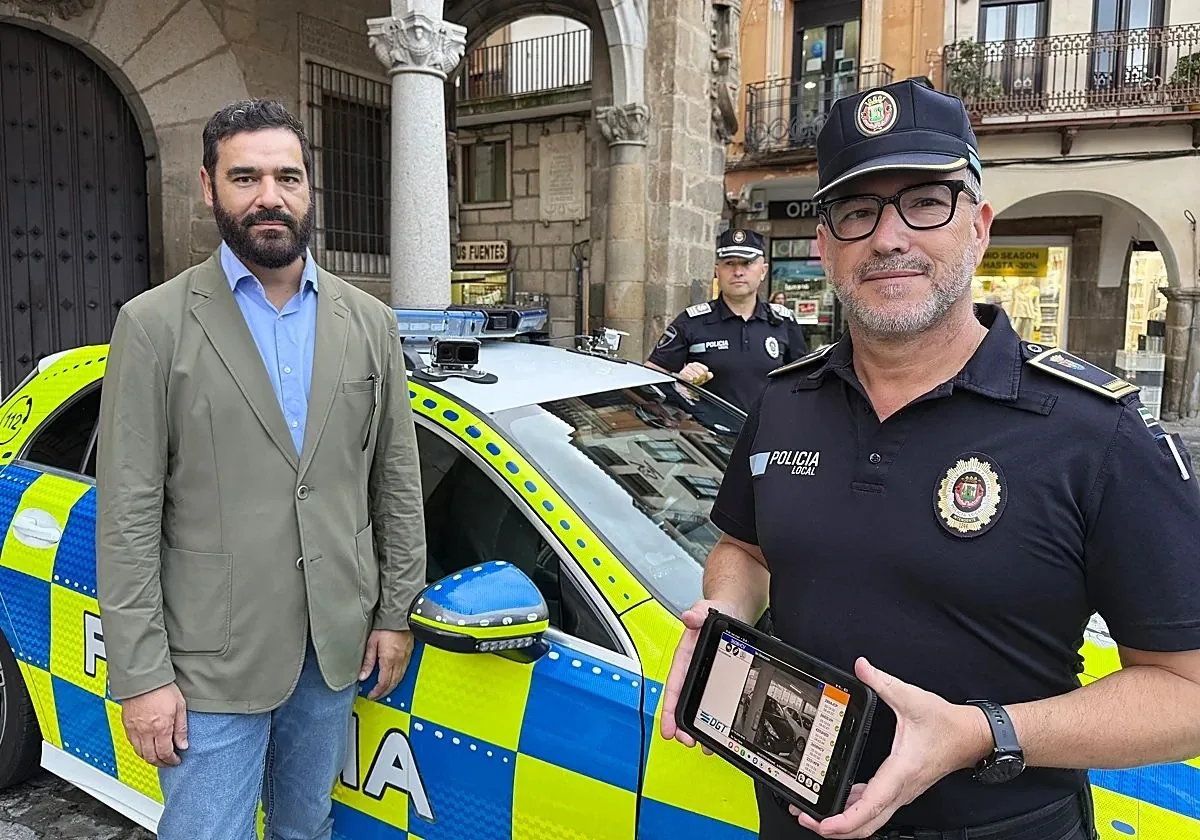
Plasencia City Council and its Local Police have taken an important step in mobility and road safety: the Local Police now patrol with OCR-ID, the automatic number plate recognition system from Labrax Soluciones, using Lynet cameras from Adaptive Recognition.
Integrated into the police platform and connected to the DGT
The readings are integrated into Appolo Traffik, the traffic module of Appolo, the police management platform that the City Council adopted last year. While the patrol is on the move, the system checks the vehicle's insurance, roadworthiness test (ITV) and other issues with the DGT in real time.
The aim: making traffic work
At the launch, the Mayor, David Dóniga, summed it up like this: the aim is not to raise revenue but to make traffic work. In practice, that means:
- More turnover in car parks, such as those on Calle Velázquez or La Isla.
- Loading bays that are used for loading and unloading.
- Reduced-mobility spaces kept free for those who need them.
GPS geofences do the repetitive work so that officers can be where they are really needed.
Equipment that moves between cars
The equipment is not tied to a single vehicle: it moves from one car to another, marked or unmarked, depending on what each operation needs.
Technology you don't see, but you notice
Labrax Soluciones thanks Plasencia City Council and its Local Police, especially Superintendent José Antonio Quijada and Sub-Inspector Gonzalo David, for their commitment to technology in the service of residents. For Labrax, that is what a smart city is: technology you don't see, but you notice.
About Labrax Soluciones
Labrax Soluciones is a Galician technology company, headquartered in A Coruña with offices in Culleredo and Madrid, specialising in software for public administrations, security forces and emergency services.